Virtual Safety Signs vs. Floor Paint and Tape: Which Works Better in Industrial Facilities?
Floor paint and tape remain useful for permanent markings, but projected safety signs offer a flexible, non-contact option for locations where markings wear, layouts change, or warnings need to be triggered dynamically.
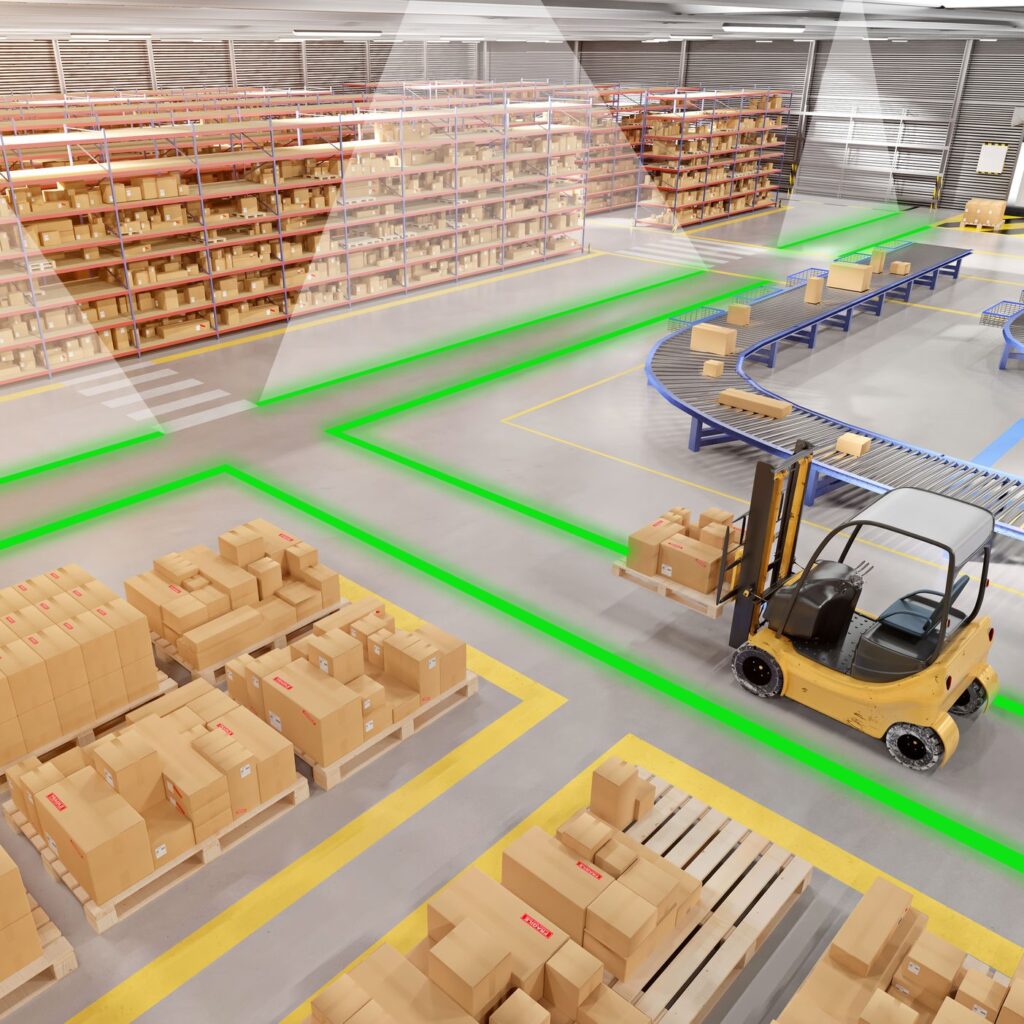
Industrial facilities have relied on floor paint, adhesive tape and fixed signs for decades. They are inexpensive, familiar and effective for many permanent markings. But warehouses, production plants and logistics facilities increasingly face a different problem: traffic routes change, forklift tires wear markings away, and some warnings are only relevant when a vehicle, pedestrian or machine is present.
This is where virtual safety signs can complement traditional floor marking. Instead of applying a symbol directly to the floor, an LED projector displays a sign, word or graphic onto the required surface from above.
Floor paint and tape are still useful
Projected marking should not be presented as a universal replacement for physical safety controls or traditional signage. Paint and tape remain practical when the required marking is permanent, the floor is suitable, and traffic does not create excessive wear. Physical barriers and separation should also be considered where the risk requires a stronger control measure.
The question for an industrial buyer is therefore not “Which technology is always better?” but rather “Which marking method fits this location and operating condition?”
Where traditional floor markings become difficult
High-traffic areas can be challenging for surface-applied markings. Forklift tires, pallets, cleaning processes, dust and production activity can gradually reduce visibility. Repainting or replacing tape may require surface preparation and maintenance time. A layout change can also mean removing old markings and applying new ones.
Projected signs avoid direct contact with the floor. Because the image is created optically, forklift wheels do not physically abrade the sign itself. The projected graphic can also be changed by replacing or reconfiguring the projection pattern, depending on the projector design.
Static projection or triggered projection?
A projected sign can operate continuously, but one of the more useful industrial applications is event-based activation. The projector may be integrated with a sensor, PLC, door signal or other control device so that a warning appears only when a predefined condition occurs.
For example, a STOP symbol may illuminate at a blind warehouse intersection when a forklift approaches. A pedestrian warning can activate near a doorway. A visual warning can also be synchronized with machinery or material-handling movement.
What should be evaluated before selecting a projector?
Projector selection should be based on the actual site rather than wattage alone. Important inputs include mounting height, required image size, ambient illumination, viewing distance, installation angle, environmental conditions and the required trigger method.
Lens selection is particularly important because it affects projected image size at a given distance. A projector that works well at one mounting height may not produce the required image dimensions at another. High ambient light can also reduce perceived contrast, so the surrounding lighting conditions should be evaluated before equipment is selected.
When virtual safety marking makes sense
Virtual safety marking is especially worth evaluating when a facility has high floor wear, changing layouts, dynamic hazards or locations where a warning needs to appear only at a specific time. It can also be useful when a customer wants to display standardized symbols, text, pedestrian warnings, STOP signs or other application-specific graphics without permanently modifying the floor.
A practical selection approach
Before requesting a quotation, prepare five basic pieces of information: mounting height, required projection size, approximate ambient light level, desired symbol or message, and whether the projection should operate continuously or be triggered. Photos or a simple site drawing can make projector and lens selection significantly more accurate.
SNT application approach: virtual safety marking should be engineered around the location. The goal is not simply to install a light, but to deliver a clearly visible message at the correct position under the actual operating conditions.
SNT Engineering & Selection Framework
Related Technical Articles & Engineering Guides
How Crane Warning Lights Create Visible Hazard Zones Below Overhead Loads
Crane warning lights project visible lines, spots or symbols onto the floor to improve awareness of overhead crane…
How to Choose an LED Safety Line Projector for a Warehouse
Mounting height, required line length, ambient light and installation geometry matter more than wattage alone. This practical guide…
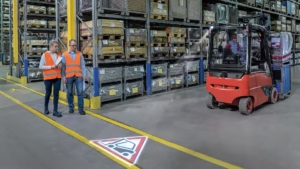
Forklift Safety Projection Lights: A Practical Guide for Warehouses and Factories
Forklifts operate close to pedestrians every day in warehouses, manufacturing plants, loading areas, and distribution centers. Blind corners,…