How to Choose an LED Safety Line Projector for a Warehouse
Mounting height, required line length, ambient light and installation geometry matter more than wattage alone. This practical guide explains the key inputs for selecting a warehouse safety line projector.
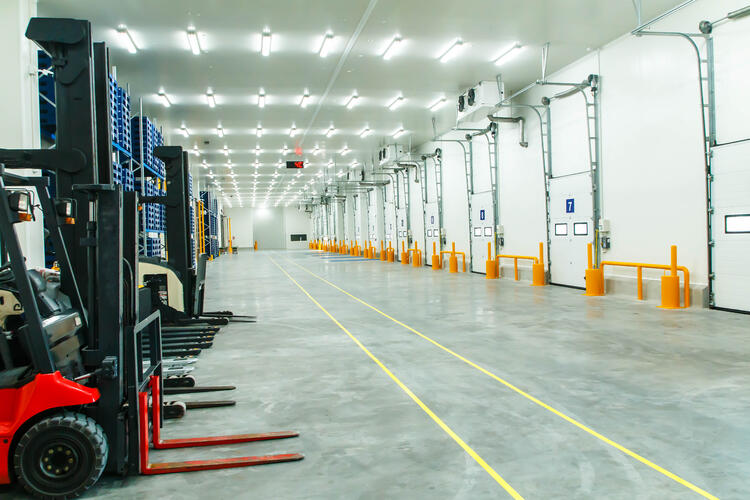
Projected safety lines are increasingly used in warehouses and industrial facilities to create visible lanes, boundaries, staging areas and guidance lines without applying the marking directly to the floor. However, selecting a line projector by power rating alone can lead to poor results.
A useful specification starts with the application geometry and the lighting environment.
1. Define the purpose of the line
First decide what the projected line needs to communicate. Typical applications include pedestrian lanes, forklift boundaries, AGV routes, pallet staging, loading areas and temporary exclusion zones. The required line length, width, color and visibility depend on how the line will be viewed and what it is intended to separate.
2. Confirm the mounting height
Mounting height is one of the most important inputs because it directly affects optical selection and projected coverage. A projector installed at 3 meters is a different optical problem from one installed at 8 meters.
Provide the vertical mounting height and, if the projector will be angled, the approximate horizontal offset from the target area. A simple installation sketch is often more useful than a long written description.
3. Specify the required line length
Do not simply request “a long line.” Define the approximate line length required on the floor. Lens angle and installation distance determine the projected coverage, while the optical design influences line thickness and intensity distribution.
If the line must cover a wide aisle or a specific machine boundary, include those dimensions in the inquiry.
4. Evaluate ambient light
Projection visibility is always relative to the surrounding illumination. A line that appears strong in a dim warehouse may be less prominent under bright high-bay lighting or near daylight openings.
For project evaluation, provide an approximate lux level if available. If a lux measurement is not available, describe the environment—for example, low-light warehouse, normal indoor industrial lighting, brightly illuminated production area, or area affected by daylight.
5. LED or laser?
LED and laser line systems have different optical characteristics. LED systems can be attractive where a wider, visually prominent line is preferred. Laser systems can provide a more precise line in certain applications. The appropriate choice depends on line geometry, visibility requirements, installation distance and applicable safety requirements.
The technology should therefore be selected around the application rather than simply choosing the brightest specification on a datasheet.
6. Continuous or triggered operation?
Some projected lines operate continuously. Others can be connected to sensors, PLCs, doors or machine signals. Triggered operation can be useful when the boundary is only relevant during a particular movement or process.
Examples include activating a line when a forklift enters a zone, when a loading door opens, or when equipment begins operating.
7. Consider the installation environment
Industrial installations may involve dust, moisture, vibration, temperature variation and difficult access. The required enclosure protection and mounting method should match the site. Maintenance access should also be considered during the design stage.
Information to send with an inquiry
For faster selection, provide: mounting height, required line length, approximate ambient lux, preferred color, continuous or triggered operation, indoor/outdoor environment, supply voltage and one or two site photos.
SNT selection principle: the correct projector is the one that creates the required line at the required location with sufficient visibility for the actual environment. Wattage is only one part of that engineering decision.
SNT Engineering & Selection Framework
Related Technical Articles & Engineering Guides
How Crane Warning Lights Create Visible Hazard Zones Below Overhead Loads
Crane warning lights project visible lines, spots or symbols onto the floor to improve awareness of overhead crane…
Virtual Safety Signs vs. Floor Paint and Tape: Which Works Better in Industrial Facilities?
Floor paint and tape remain useful for permanent markings, but projected safety signs offer a flexible, non-contact option…
Forklift Safety Projection Lights: A Practical Guide for Warehouses and Factories
Forklifts operate close to pedestrians every day in warehouses, manufacturing plants, loading areas, and distribution centers. Blind corners,…